The Feature / Deep Dives
Lewis Hamilton's Number Plate Started It All
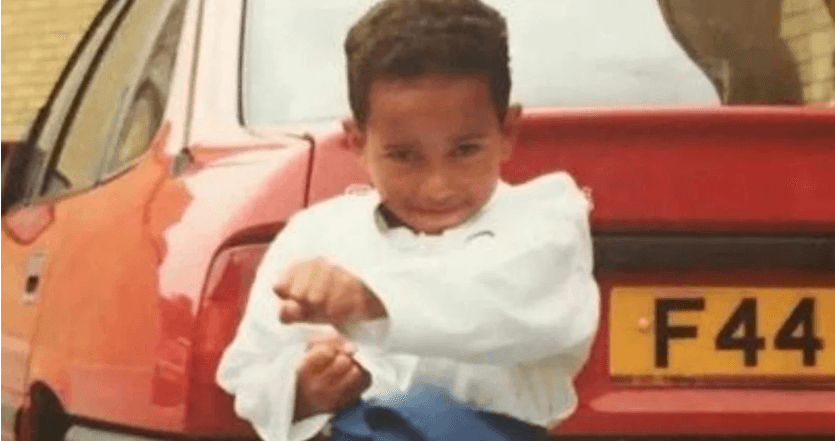
There are very few things in Formula One with a backstory as quietly remarkable as Lewis Hamilton's racing number. 44 is on the cars, the helmets, the merchandise, and now the scarlet red of Ferrari. But almost nobody outside the number plate world knows exactly where it came from. The answer is a Vauxhall Cavalier parked on a driveway in Stevenage.
The Go-Kart and the Cavalier
Anthony Hamilton bought his son Lewis a go-kart when he was six years old, promising to support his racing as long as he kept his grades up. It was a secondhand machine bought through a newspaper advertisement, fixed up and made race-ready by the family. When it came time to choose a racing number, neither father nor son had a strong preference. So they looked at the car on the drive. Anthony's Vauxhall Cavalier wore the registration F44 HMA. The 44 was right there, ready to be borrowed. Hamilton himself confirmed the origin at the BBC Sports Personality of the Year ceremony: "I always start with number 44 because that's the number that I had on my go-kart when I was eight years old. It was my dad's car registration number, F44, so each year it's just a new chance to rise to the challenge."
The Plate Itself
F44 HMA is a prefix format registration, issued in 1988, the year letter F placing it in the period running from August 1988 through to July 1989. HMA is the area code assigned to the London borough of Middlesex during that era. It is an entirely ordinary combination by any collector's measure, the kind of plate that would pass without a second glance on the motorway. Except that it is the plate that gave the greatest racing driver of his generation his number. Hamilton chose the number 44 since he had used it for his first go-kart as a child. At that point, he and his father did not know what number to use, so they went with the number on the plate of Anthony's Vauxhall Cavalier. The car has long since gone, and the plate has not been sighted on UK roads in any traceable record. F44 HMA, like many privately held prefix registrations of that era, has simply disappeared into the ordinary churn of cars and keepers that defines most of Britain's 45 million registered vehicles.
What Happened Next
New Formula One driver number regulations introduced for the 2014 season allowed drivers to pick a unique car number to use for the remainder of their careers, with Hamilton electing to compete under his old karting number 44. He has been asked, multiple times, why he has never switched to number 1 despite winning the championship six times during that era. His answer was straightforward: "One didn't look good on the car; 44 looks better." There is something very Hamilton about that reasoning. Practical, personal, and entirely unbothered by convention. Over the years, 44 became a brand in the same way number 46 became synonymous with Valentino Rossi in MotoGP. Today Hamilton races for Ferrari, and the 44 goes with him. A number that originated on a prefix plate belonging to a Vauxhall Cavalier on a Stevenage driveway in 1988 now sits on arguably the most famous car in the most watched motorsport on earth. The plate itself is lost to time. Its legacy, as Hamilton continues to bring Ferrari back to the front of Formula One, keeps evolving.
Plates mentioned
Previewing 2 of 2 referenced plates
Value your plate for free
Get a grounded market range, dealer valuations, and competitive offers — all in one place.